
Leigh Jurd is a parent of three with hands-on experience in early childhood environments, including roles as a playgroup day leader, preschool volunteer, and learning support aide, shaping her perspective on meaningful, sustainable play.
Quality over quantity is a phrase many parents have heard, but it can be hard to apply when it comes to toys. Between gifts, trends and well-meaning purchases, toy collections can quickly get out of hand.
Research has shown that children play more creatively and for longer when they have fewer toys available, rather than being overwhelmed by too many options. Choosing well-made, versatile toys, and making use of second-hand toys, can support children’s development while also providing a more sustainable approach to play.
Infant, baby and toddler toys
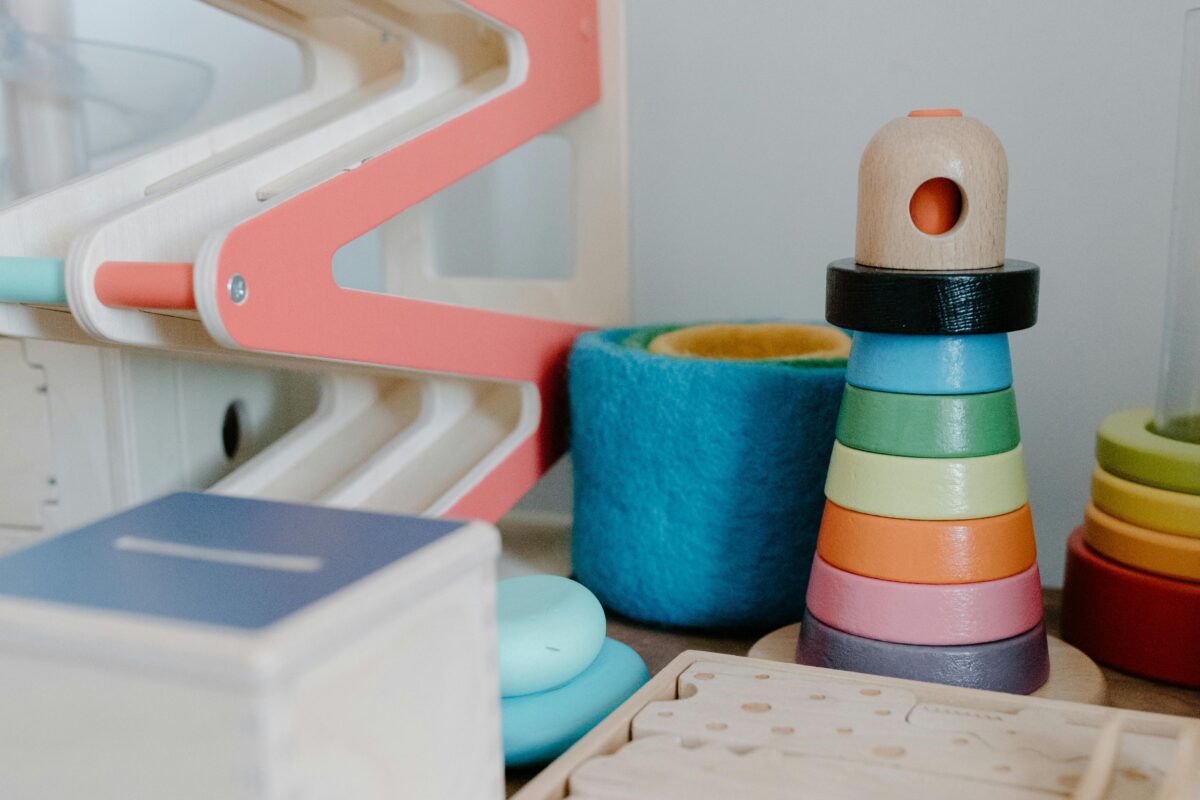
Montessori style wooden stacking toys are popular at the moment, and Kmart do much more affordable versions of these. Most babies love basic stacking cups, stacking rings and plastic links, and these are cheap and easily cleaned. Older babies love “posting” things into containers, so shape sorters or similar are often also a hit.
Go easy on stuffed toys as these are a common gift and you’ll likely end up with more than enough anyway.
Little People are hit or miss in my experience – some toddlers adore them and some are disinterested. They do come in a variety of models and are very inclusive. They have been around for a long time, so are readily available second-hand.
Toddlers love toys they can push around. Boys and girls alike enjoy dolls prams, block trolleys and ride ons. We left the larger ride on toys like the Cosy Coupe for playgroup, though these are virtually indestructible and last many children.
Building Blocks
Wooden blocks are ubiquitous, but my toddlers weren’t very interested in these and preferred brightly colored plastic building materials instead. However wooden blocks are very cheap, very durable, and generally eco-friendly.
Mega Bloks are a great early builder – they are chunky lego-style blocks that lock together and pull apart a lot easier than Duplo – in my experience they don’t last as long as Lego and Duplo, so these are ideal to pick up used. Avoid investing in a large collection as they are outgrown quickly.
Lego is a classic for a reason. All Lego is interchangeable, and Lego is also somewhat compatible with Duplo. It’s easy to clean – use a fine mesh laundry bag and dunk it in warm soapy water then dump it out on a towel in the sun to dry. Lego has been around since the 60’s and there’s plenty of it available on the second-hand market – large mixed lots are available on eBay and Facebook Marketplace, and often op shops have mixed lots available too. For older kids who want the challenge of following instructions, Rebrickable has copies of Lego instruction booklets going back decades. While there are Lego lines specifically targeted towards girls with licensed tie-ins, the basic primary coloured blocks are suitable for everyone, and there’s no real need for the gendered sets in my opinion.
Magnetic Tiles are also very popular with the preschool set. Basic sets are available reasonably priced at Kmart.
Open-ended toys like blocks and construction sets are widely recognized for supporting creativity, problem-solving and independent play.
Vehicles
A wooden train set was one of the longest lasting toys in our household, as our eldest would make complicated tracks for his siblings to use. The Ikea Lillabo wooden trains sets are compatible with the Thomas & Friends Wooden Railway and other wooden railway sets – the Thomas one is now discontinued but still available both new and used on eBay and Marketplace. We found that it was most cost effective to get the Ikea basic track and add the character trains, but the generic trains are just as much fun. This is one of the few toys we have kept for visitors now that our kids are teenagers.
Die cast cars come in many brands, but the cheaper ones tended to break in our experience. Hot Wheels brand basic die cast cars are $2 so worth getting for the better quality. They are often found in bags in op shops, and most of ours actually got passed down from an older cousin, before we passed them onto a younger one. A lot of the play sets are flimsy and frustrating though, so be careful there. The play mats or carpets seem like a good idea, but were a bit limiting in terms of scope – our kids enjoyed it when I rolled out the butchers paper and drew up a basic road map with recognizable buildings, squares labeled “shops,” hospital,” etc.
Dolls
Most 18 inch / 45cm dolls can share clothing. Dolls this size include Baby Born and Our Generation, both of which are readily available at op shops and Marketplace. Baby Born is a hard bodied baby doll, and while it can “eat” food, we never bothered – drinking water and wetting was novelty enough. It comes in light or dark skinned options and boy or girl, but the light skinned girl model is the most ubiquitous in op shops. Our Generation are soft bodied dolls representing older children and come in a huge variety of skin, hair and eye colour and lots of accessories are also available.
My kids weren’t into doll house scale toys so we left that for playgroup, but I also see these often on Facebook Marketplace.
Conclusion
There’s no single “perfect” toy collection, and every child will have their own preferences. Focusing on a smaller number of durable, versatile toys can lead to more meaningful play, less clutter, and less wastage over time.
By choosing quality over quantity, and embracing second-hand options, parents and caregivers can create a play environment that supports creativity, independent play, and sustainability.